FREE SHIPPING ON ORDERS $200+






It’s no surprise that the area we lock eyes on the most, is the one people always ask me about. We constantly check our eyes throughout the day, and it’s the first thing people look at when they’re talking to you (I hope). Keeping them looking revived, smooth and bright is therefore a skincare priority for many.
However, the skin around the eyes is very fragile —typically only about 0.5 mm thick compared to other parts of the face such as the cheeks or forehead which can be around 2 mm thick. It also has fewer oil glands so it cannot retain moisture as easily, making it prone to dehydration, lines, crepiness and irritation. Using products designed specifically for this ultra-thin skin is therefore important to respect its vulnerability and specific concerns.
Whether it’s fine lines and wrinkles, puffiness or dark circles, we all have our beauty bugbears; but here’s my topical recommendations to minimise your skincare concerns whilst celebrating the laughter lines that are evidence of a life well-lived (yes, really).
First, a Note on Application
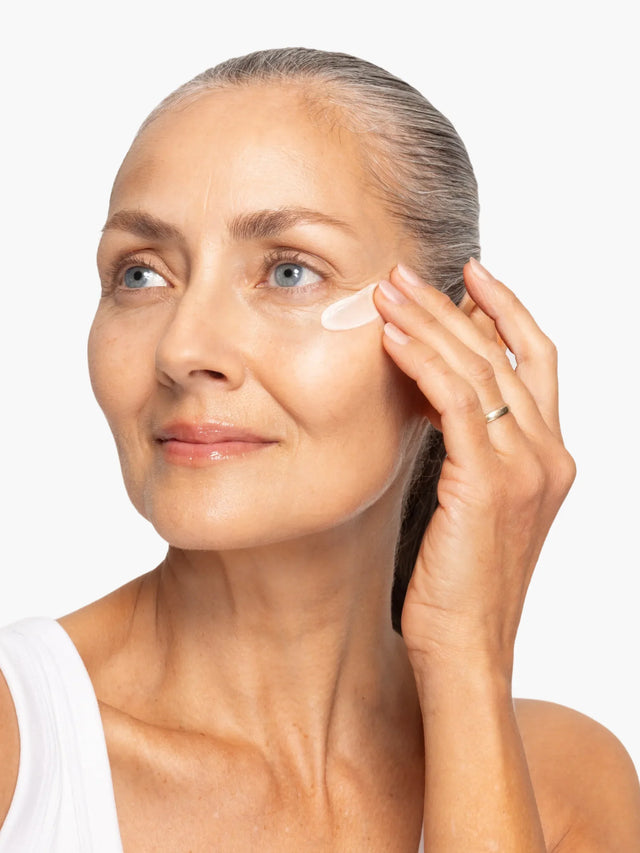
It’s key to note that applying your eye cream correctly is critical if you are to get the results you want. Applying it to the orbital bone rather than right under the eye itself (think ‘bone, not ball’) is the most effective way to avoid causing puffiness, and it’s imperative to apply it before any of your treatment steps or moisturiser/sun protection. This will maximise its efficacy as it won’t have to fight its way past richer formulations and will create an all-important barrier. I’ve always said that putting your eye cream on last is like wearing your knickers over your clothes. Apply first for the best results.

Hooded Eyes
Hooded eyes occur when we have excess skin between the brow and the lash line. This can be a genetic feature, but most commonly it’s a result of natural ageing and loss of elasticity. The muscles around the eye (orbicularis oculi) and the orbital septum also weaken, allowing fat to prolapse above and below your eyelids. Using eye-specific retinoids can help increase collagen and firm the area, and polynucleotides are another way to improve skin quality, but for severely hooded eyes the best solution is surgical blepharoplasty to remove the excess folds of skin.
Crepiness
Crepiness around the eyes is that fine, crinkly texture that makes skin look a bit like crepe paper. It’s caused by a combination of factors: dehydration, sun damage, rubbing your eyes too often (yep, sorry), and the natural decline of collagen and elastin as we age. Pollution and smoking can also break down collagen and exacerbate crepey skin. Unlike dryness, crepiness involves a loss of skin structure and elasticity, not just moisture.
Protection is your first preventative step - antioxidants such as vitamin C creams are great for defending against free radicals (just ensure it is a specifically eye-appropriate formula), and don’t skip your SPF around the eye area – as UV exposure will worsen any dryness and texture and lead to longer-term skin damage issues that are much harder to treat.
Peptides are brilliant for improving firmness and elasticity, are fantastic for encouraging collagen production, and are also gentle/well-tolerated around the sensitive eye areas. Ceramides will also strengthen the skin barrier and lock in moisture, reducing the dryness that makes crepey skin more noticeable.
Dryness
Dryness around the eyes is a common consequence of moisture loss, skin conditions such as dermatitis and eczema, low humidity (especially in winter or in air-conditioned rooms), natural ageing and sun damage. As we age, skin loses its natural elasticity and the ability to retain hydration, and with such thin skin around the eyes this make the area even more vulnerable. Not drinking enough water can also affect the skin’s hydration levels and worsen dryness.
Hydration is also key for plumping and smoothing out the tissue, and peptides are great for improving skin texture and elasticity; so, a peptide-rich formula will help amplify moisture and diminish texture. Polyglutamic Acid is also great at moisturising, as it boosts NMF within the skin, squalane and hyaluronic acid help boost hydration, and phytosterols improve moisture retention to help reduce dryness and crepiness.
Fine Lines and Wrinkles
Depending on your age and the depth of your lines and wrinkles, various topical and in-clinic treatments can help. Fine lines will respond well to the same treatments as dry or crepey skin, and for deeper wrinkles—or as a preventative step post 30— gentle, eye-safe retinoids will boost collagen over time and add structure and thickness to this naturally thin area.
Ingredients such as phytosterols, winter cherry and Persian silk tree bark extract can all help to tackle the appearance and depth of fine lines and wrinkles. Horse chestnut extract is also brilliant in helping restructure, smooth and firm the eye contour, reduce the appearance of eye wrinkles and improve overall skin quality. The Skin Rocks Eye Cream is clinically proven to significantly reduce fine lines immediately* as well as an all-round fantastic product for all eye concerns.
*Based on an independent clinical study on 52 participants, using the product daily for 8 weeks.

Milia
Ah, those pesky little white bumps that pop up around the eyes. Often confused with little flesh-coloured spots, they are in fact a mini cyst full of keratin. They have nothing to do with your pores, (they are under your epidermis) and as such, it’s important you do not try to pick, squeeze or needle them out yourself. This is not the time for DIY, and if you do attempt it, you are risking more trouble ahead and even scarring. Get the pros to remove them if they are troublesome and tweaks to your skincare routine don’t help. I’m talking about professional manual extraction here, not laser or microdermabrasion. It should be a highly qualified therapist who has experience doing this (ask them outright “do you physically remove milia?”). If not, see a derm.
If you have smaller milia, keeping your skin well-cleansed and consistently exfoliated should help. Exfoliate every day (gently, no scrubs) and alternate between a topical acid toner and a hydrating toner/essence. One will help shift the surface layers of skin, and the other will retain hydration. Maintaining balanced skin hydration is important, as if the skin becomes too dry, it may produce more keratin, and a vicious cycle begins. Exfoliation and treatments like retinoids can help with milia - the goal being to promote cell turnover and help the skin naturally shed the trapped keratin. An occasional clay-based mask may also help.
Under-eye Bags
As with hooded eyes, if the bags are severe, there is little except surgery that will eliminate them. However, some topical treatments can certainly help firm, tighten and reduce eye bag volume. Ingredients such as Persian silk tree bark extract can help reduce puffiness and provide a noticeable improvement to visible signs of fatigue, and caffeine can temporarily tighten and firm the skin - giving the under-eye area a smoother, more refreshed appearance.
Dark Circles
Dark circles are notoriously tricky, as they are caused by numerous factors including genetic and ethnic variables, higher levels of melanin, a family history of dark circles, poor circulation, allergies (that cause hypertrophy and erythema of the eyelid skin), and of course tiredness. Although they cannot be treated well topically, the appearance of them can be minimised with the right eye products and potentially lifestyle changes. Caffeine for example has de-puffing qualities and can help reduce the appearance of darkness under the eye, and ingredients that create optical blurring will help diminish their appearance. Ultra-fine diamond powder for example, helps to illuminate and brighten the skin by scattering light and reducing the appearance of dark shadows. It can also be more universally suitable than mica, as it doesn’t leave a white cast on darker skin tones.
Finally, lifestyle factors can play a significant part too – and whilst they may not permanently eliminate under-eye bags and dark circles, making healthier choices can help reduce their appearance:
1. Prioritise sleep: Getting adequate sleep is crucial for maintaining healthy skin. When well-rested, the skin around your eyes will appear plumper and firmer.
2. Watch your salt intake: Reducing the amount of salt in your diet can help reduce the appearance of under-eye bags. Salt contributes to fluid retention, which can lead to puffiness; especially in areas such as the under eyes where the skin is thinner.
3. Use cold compresses or ice globes: Applying a cold compress or ice globes to the under-eye area can help reduce swelling and puffiness.
4. Stay hydrated: Staying hydrated is obviously essential for healthy, hydrated skin. Drinking water helps flush out excess salt and toxins from the body and supports healthy blood flow and circulation.
5. Address allergies and sinus problems: Allergies and sinus problems can cause under-eye bags. Treating these conditions can help reduce their appearance, so do seek advice from your doctor to rule out underlying causes.
Quit smoking: Smoking is shocking for skin full stop: constricting blood vessels, stifling oxygen to the skin, generating free radicals, speeding up premature ageing, battering your collagen and slowing circulation. Nicotine also disrupts sleep cycles, leading to sleep deprivation and dark circles due to fluid retention and fatigue. It’s hideous.
Words by Caroline Hirons, Skin Rocks Founder and Skincare Expert