FREE SHIPPING ON ORDERS $200+








1. ‘Layering sunscreens will increase sun protection’
Your SPF does not add up. Wearing SPF 30 underneath SPF 50 will not give you SPF 80. The sun protection factor is only equal to the highest number you apply.
2. ‘You only need to wear sunscreen when it is sunny’
Skin-damaging UV rays from the sun are present all year round, and damage is cumulative, so ensure you protect your skin daily with broad-spectrum sunscreen. This means that the formula can protect your skin from both types of UV rays and will usually be indicated on the label, either by ‘broad spectrum’ or the UVA logo in a circle alongside the SPF rating.
3. ‘A higher SPF will always mean a thicker texture’
The texture of sunscreen will solely depend on the formula, not the sun protection factor. This misconception comes from the fact that with some mineral-based sunscreens, for example, you need to add more of the mineral filter to reach a higher SPF — which can increase the likelihood of a white cast (but doesn’t necessarily mean it has a ‘thicker’ texture).
4. ‘Darker skin tones don't need to wear sunscreen’
Increased melanin levels in the skin can offer a very small amount of natural protection from UV rays; however, darker skin tones are still susceptible to UV damage, and should wear a minimum of SPF 30 every day.
5. ‘There is little difference between SPF 50 and SPF 30’
‘SPF’ (i.e. Sun Protection Factor) on pack relates to the amount of UV radiation it takes for skin to burn compared to when not wearing any sunscreen. The higher the SPF, the higher the level of protection. SPF 30 lets through 3.3% of UV rays, whereas SPF 50 lets 2%. Although this may seem like a small difference, this means that SPF 30 lets through over 50% more UV rays than SPF 50 does, which is not an insignificant difference, especially when considering the cumulative effect that UV rays have over time.
6. ‘Makeup or a moisturiser with added SPF is sufficient’
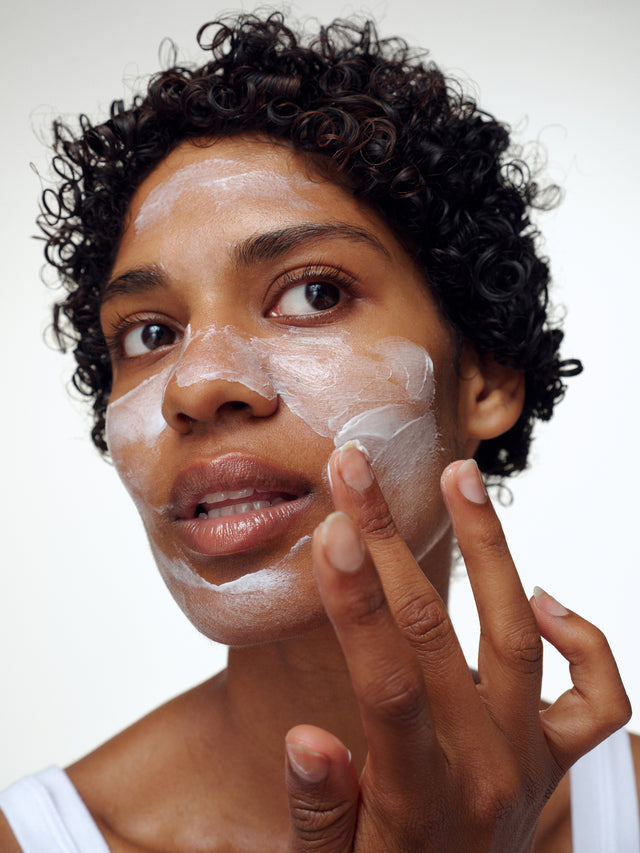
False. On average, you need ½ teaspoon of sunscreen for your face and neck (or the “two-finger rule” for face + another 1-2 finger lengths for the neck). This may be a reasonable amount when using a dedicated sunscreen, but when it comes to your foundation or moisturiser, you would never use that much, and you are are also less likely to reapply throughout the day. We recommend always using a dedicated, broad-spectrum SPF in your routine, even if you are then applying a foundation with added SPF on top.
7. ‘I am wearing SPF 50, so I do not need to reapply as often’
Regardless of the sun protection factor, sunscreen gets less effective over time. The protective film it provides will break down as you wear it due to sweat, transfer (e.g. brushing against your face with your hand/clothes etc) and coming into contact with your skin's natural oils. This is why it is important to reapply your SPF every 2 hours, especially if you are in the sun for long periods of time.
8. ‘You do not need to wear sunscreen if you are inside’
Whilst it is true that if you were getting absolutely no UV exposure (i.e. sitting in the pitch black all day), you would not need to wear sunscreen, this is very rarely the case. UVA rays penetrate through glass, so if there is a window nearby, your skin will be getting some sun exposure. It is best practice to apply sunscreen every day, even if you are staying indoors.
9. ‘Sunscreen is always the last step in your routine'
In most cases yes, sunscreen is the last step of your routine. This not only allows optimum penetration of the products you apply beforehand but also reduces the chance of your sunscreen being impacted by actives in other products.
Over the past few years, sunscreen brands have started to use new-to-market technologies that require their product to be applied first; we are also seeing the introduction of SPF serums, which are placed before moisturisers in your routine. If in doubt, please always follow the directions on pack.
10. ‘Mineral sunscreen is better than chemical sunscreen’
This is not true and ultimately comes down to personal preference. There are a number of both advantages and drawbacks with both mineral and chemical sunscreens. The best sunscreen is one that you will use consistently.
11. ‘You can mix other products in with your sunscreen’
In order for sunscreen to work effectively, it needs to create a film on top of the skin. Mixing products in with it (for example, bronzing drops) can disrupt this, leading to patchy, uneven and inadequate protection. Sunscreen products are also tested alone for their protection (i.e. without cosmetic products mixed in), so mixing other products in with them is likely to destabilise the formula and reduce the SPF protection.
There are, of course, evolving/recent technologies such as the Ultra Violette Queen Screen SPF 50 Super Glow Drops, which have been specifically formulated and tested to be mixed in with sunscreen. Read more about them below, but as a general rule, please do not mix anything with your sunscreen.
12. ‘Chemical sunscreens cause skin cancer’
A rise in skin cancer cases has led some people (we see you, ‘clean’ brigade) to claim that it is the chemicals in sunscreen causing this. This is completely and utterly false. Firstly, everything is a chemical – even water – and there is no evidence that the chemical UV filters in sunscreen products are directly linked to skin cancer. The increase in the number of cases is likely due to the fact that skin cancer diagnoses have improved, meaning that more people are being diagnosed, but also that more people are being treated. The thing that causes skin cancer is UV damage, and guess what? Sunscreen protects you from this.
13. ‘Wearing sunscreen stops you getting vitamin D’
It is true that the sun does provide vitamin D, but it’s important to remember that even SPF 50 will allow 2% of UV rays through, and therefore, you are absolutely still getting some sun exposure. You also don’t need to bathe in the sun to get sufficient levels of vitamin D. The amount of sun exposure needed will vary from person to person, but the UK Government advises that everyone should consider taking a vitamin D supplement during the autumn and winter.
14. ‘I’ve never worn sunscreen, so it’s too late to start wearing it now’
It is never too late to start wearing sunscreen. The damage caused by UV rays accumulates over time, meaning that each time your skin becomes burnt, your risk of developing skin cancer increases, and signs of skin ageing are accelerated. Just because you have been burnt before, it does not mean you will definitely develop skin cancer, and protecting your skin moving forward will help to prevent your chances of developing it from increasing.
15. ‘You only need to wear sunscreen when abroad, the sun is not strong enough in the UK to cause damage’
This is not true. Even if it is not sunny or doesn’t feel warm, damaging UV rays are still present – in fact, they are present whenever it is light outside, even in winter, so the risk of damage is always there. There are times when the UV rays are stronger; for example, the sun in the UK is strongest between March and October and between the hours of 11am and 3pm. The risk of skin damage is increased during these times, so whilst you need to wear SPF all the time during the day, it’s important to take extra care during this time.
Words by Ceyda Faik-Yildirim MSci – Team Skin Rocks
Qualifications – MSci Chemistry (Hons), VTCT Level 2 Facial Massage and Skincare
All Think Science™ content published by Skin Rocks is researched, written and reviewed by qualified scientists.