FREE SHIPPING ON ORDERS $200+






What's going on?
We are seemingly at a crisis point in sun safety, and it’s clear that gender disparity is at play. Despite a dramatic increase in skin cancer awareness and a more widespread commitment to wearing sunscreen, men are far less likely to be diligent or consistent sun protection users. Shockingly, since 1973, melanoma death rates in men have risen by 219% — that's more than triple the rate of increase seen in women, whose deaths rose by 76% over the same period.
Today, around 1,400 men in the UK die from melanoma every year compared to 980 women, and one American man dies of skin cancer every 90 minutes* While there has been steady incline since the 70s, over the last decade melanoma death rates for women in the UK have fallen by 9%, but for men they haven't changed — highlighting a preventable gap that continues to widen in real time.
**American Cancer Society projections, 2026*.
Why is this gap happening amongst men?
The rise of 'toxic masculinity’ — which refers to the exaggerated and harmful societal standards for men — can be seen across social media, with an alarming increase in the number of men who believe that using sunscreen could be interpreted as ‘feminine’ or ‘weak’. In a recent study, only 18.8% of 485 men said they used sunscreen daily — even though over 54% understood that it protected them against skin cancer and could significantly slow down photoaging.
The study found that the men least likely to wear sunscreen scored highest on perceived traits including 'toughness', 'dominance' and 'restrictive emotionality'. The biggest predictor of men not wearing sunscreen though was the avoidance of femininity — with the survey noting that many men considered the scent and skin-feel of sunscreen to be ‘feminine’. This highlights that many men are not only rejecting the application of sunscreen, but the formulations themselves —perceiving them as ‘beauty products’ rather than potentially life-saving skin protection.
Finally, the study noted that a gendered marketing approach has actively contributed to health disparities by overlooking men as a consumer group. In 2023, sunscreen featured in just 4.7% of male-oriented skincare content on Instagram, despite grooming and skincare content for men being a growing category on the platform.

The marketing problem
Another consideration is that the sunscreen industry has predominantly marketed sunscreen products almost exclusively to women — and predominantly through an anti-ageing lens. Sunscreen is one of the most effective tools for slowing down photoaging, but the pressure to maintain a youthful appearance has long been placed squarely on women. Men ageing is, broadly speaking, still socially accepted and often considered ‘distinguished’— a double standard that has encouraged the belief that it's enough to add SPF into men's moisturisers and call it a day.
The importance of dedicated sunscreens
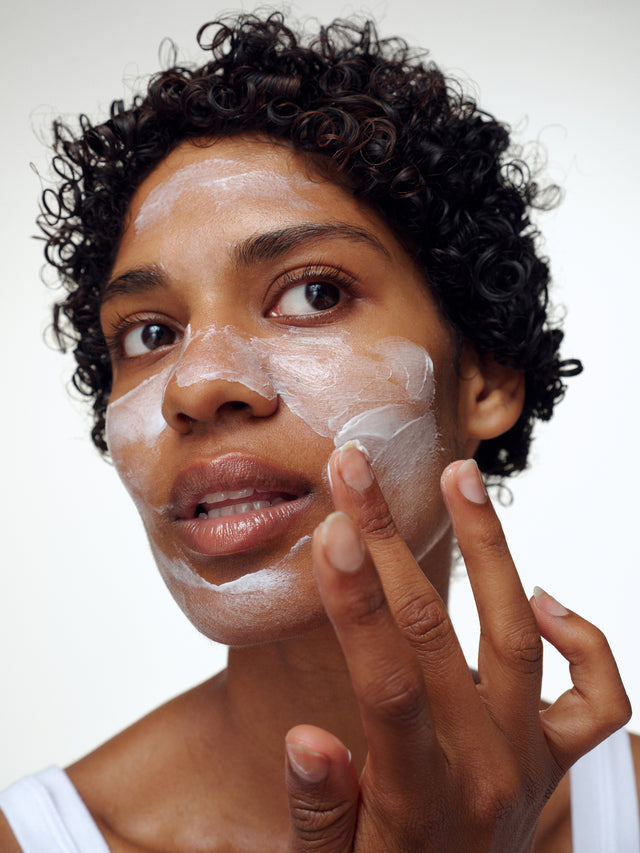
The problem is of course, SPF in a moisturiser is not the same as wearing a dedicated sunscreen — you need to apply and reapply sunscreen generously and frequently — and you would never apply the same amount of moisturiser as you would sunscreen. At least two finger lengths of sunscreen spread evenly across the face is required to get the full benefit of an SPF — significantly more than the amount most people use when applying a moisturiser.
The British Association of Dermatologists has stated that moisturiser with SPF "just doesn't perform particularly well in real world situations compared to sunscreen”.
So, even if a man is faithfully applying his SPF moisturiser every morning — and feeling very responsible about it — he will be applying a fraction of the amount needed, to a fraction of the areas that need it, with a product that wasn't designed to do the job of a sunscreen in the first place. Whilst it’s better than nothing, it’s not a replacement for using a dedicated sunscreen in the specified amounts.
 .
. 
Change is urgently needed
The marketing industry needs to change the way it approaches sunscreen education for men. Sunscreen is not a ‘beauty product’ but a skin shield that helps prevent cancer in our body’s largest organ. Nobody would hesitate for a second to protect their heart, lungs or vital organs from cancer if they could easily do so, and the research is clear: reframing sunscreen as a potentially life-saving essential rather than an optional skincare ‘cosmetic’ is one effective way to shift both skincare education and behaviour in men.

Disrupting gendered branding
A great example of a brand disrupting this space is New York based brand PASTY MAN. Launching in late June 2026, with a lead strapline "Women don’t need another sunscreen. Men do", PASTY MAN recognises that most sunscreens ignore men, and has created messaging that combines humour ("80% of what people call aging is just sun damage. Why not be the most well-preserved guy in the nursing home?”) and powerful straight-talking ("For Men Who Love the Sun but Hate to Die").
Contentious? Yes. Unforgettable? Also yes. And therein lies its power.

Sunscreen Picks
While the sunscreen market should be gender neutral and universal, it can feel like this simply isn’t the case. Until this changes, here are some sunscreens that combine efficacy with a genderless or more masculine-leaning aesthetic.
La Roche-Posay Anthelios Clear Skin Face Sunscreen SPF60
Recommended by the Skin Cancer Foundation, this oil free sunscreen provides advanced protection while absorbing pore-clogging oil, even in heat and humidity.
Horace Face and Body Sunscreen SPF50+
This high-protection, sweat-resistant formula is non-sticky and leaves no greasy feel or white cast on skin or hair.
Murad CITY SKIN AGE DEFENSE BROAD SPECTRUM SPF 50
A mineral sunscreen suitable for sensitive skin that defends against UVA, UVB, pollution and digital blue light damage.
Freaks of Nature Peak Performance Sun Stick
Designed for athletes and outdoor sports by surfer Kelly Slater, this high performance sunscreen stick is formulated with microbiome-strengthening ingredients to help fortify the skin barrier and improve resilience against environmental stressors.
La Roche-Posay Anthelios UVMune 400
A lightweight, failsafe formula that's particluarly good if you have facial hair
Words by Nicky Connors - Team Skin Rocks
Qualifications —Beauty Industry Professional, 25 years | BA (Hons) English | Beauty Writer | Copy Editor | HND Specialist Makeup
Image Credits:
Resource References
Cancer Research— https://news.cancerresearchuk.org/2022/07/15/skin-cancer-death-rates-in-men-risen-dramatically-in-the-last-50-years
Skcin.org —https://www.skcin.org/skin-cancer-causes/gender-and-skin-cancer
Independent How toxic masculinity and ‘wellness’ influencers could be giving you skin cancer —https://www.independent.co.uk/life-style/melanoma-skin-cancer-sun-cream-sunscreen-b2992491.html
Nature.com cross-sectional study — https://www.nature.com/articles/s41598-026-38144-z
British Association of Dermatologists — https://www.bad.org.uk/photographic-evidence-highlights-shortcomings-of-moisturisers-containing-spf