FREE UK SHIPPING ON ORDERS £50+






What is 'Medical Grade' skincare?
I’ve always called out the ‘medical grade’ and ‘clinical grade’ marketing for what it is: nonsense. The term ‘medical grade’ is used repeatedly, mainly in brands that choke to only sell in professional clinics. It is completely meaningless and is not a legally defined or regulated term in cosmetics.
When you launch a product in the UK, under laws such as the UK Cosmetics Regulation and the Human Medicines Regulation 2012, you will be regulated either as a cosmetic or as a medicine. There is no legally recognised category called ‘medical grade’. Classification depends not only on the ingredients but also on a product’s intended use and the claims made about it; if a product is intended to treat or prevent disease, or to restore or significantly modify physiological function, it must be regulated as a medicine and meet strict approval requirements.
Most so-called ‘medical grade’ skincare products are simply cosmetics sold through clinics or professional channels, which can create a perception of higher efficacy without any distinct regulatory standard behind the label. Just because it’s on the shelf in a dermatologist’s clinic does not mean the product is any different, in regulatory terms, from something you can buy at Space NK. What matters is clinical studies and third-party testing. Quality depends on formulation, stability, ingredient concentrations, delivery systems and evidence — not on a marketing phrase.
The only real medical grade products are prescription only and not available to buy over the counter. Speculums and breast implants are medical grade. Not skincare.
What is Collagen Banking?
The clue is definitely in the title here, as banking collagen is fundamentally about ‘saving’ enough collagen for when your natural supplies are depleted. Building up a 'savings account’ of collagen involves stimulating its production and preserving this vital protein, ensuring you have reserves for when its volume wanes with age. One of the myriad joys of ageing, collagen production starts to decline around our late 20s, and we have a finite amount of it to protect. Although certain treatments and topicals can help stimulate its regrowth later in life, banking it relies on preventatively capturing and growing our supply of it in its prime - during our youthful collagen-producing years.
This can be done in numerous ways - from the obvious sun protection (UV is one of the key culprits for collagen destruction) and use of vitamin C, antioxidants and retinoids - to professional treatments such as radiofrequency, ultrasound, microneedling, PRP, chemical peels and red LED light therapy - all of which stimulate collagen production. Polynucleotides — a relatively new skincare buzzword— also regenerate collagen supplies by stimulating the fibroblasts with a sequence of biological molecules taken from genetic strands of salmon. Vegans, step away.
What are Free Radicals?
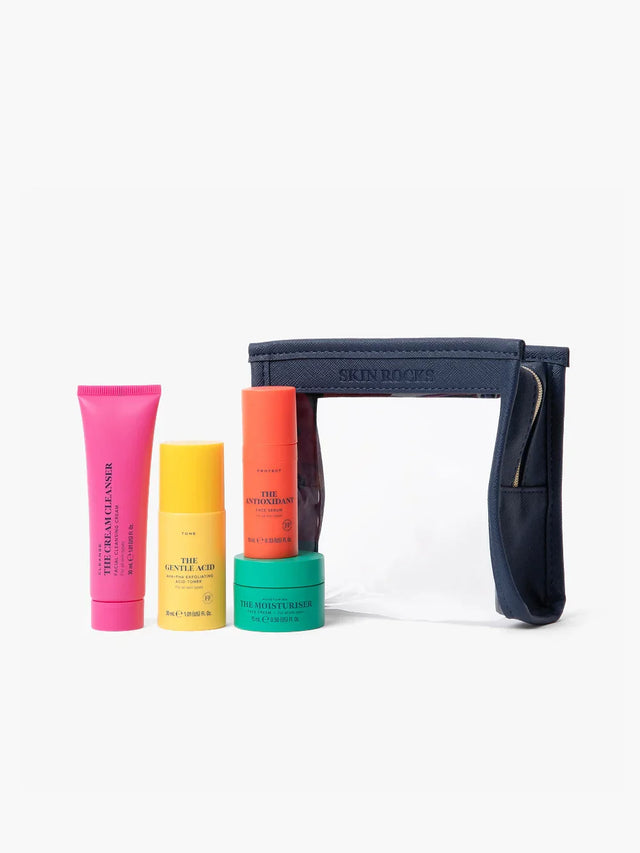
No, Free Radicals are not a hot new band, and if you aren’t well-versed in all things Skin Rocks The Antioxidant yet, you may want an intro to these molecules. Invisible they may be, but free radicals cause a range of highly visible complexion issues and are absolutely worth tackling as a non-negotiable part of your daily routine. Free radicals are unstable molecules with unpaired electrons that are constantly in search of a ‘spare’ to complete themselves, which they can steal from our healthy cells (rude). Although they are produced naturally in the body, they are also triggered by environmental aggressors such as pollution, cigarette smoke and UV rays - resulting in skin damage called oxidative stress that leads to accelerated ageing, laxity and wrinkles. Fighting free radicals is clearly a preventative skincare must, so a good antioxidant is a routine staple to ‘donate’ an electron before they have a chance to nick one from your healthy cells.
What are Polynucleotides?
Polynucleotides are genetic strands taken from salmon, which are injected into the skin to promote cellular regeneration. I know, not for everyone. However, ignoring the unappealing fishy part, it’s a pretty innovative treatment in terms of structural skin repair. Polynucleotide treatment works with the body's DNA to promote skin regeneration, stimulating collagen and elastin production and gradually optimising skin quality to promote long-term improvements. They also possess anti-inflammatory properties, increase the skin’s ability to retain water, and can accelerate the skin’s natural healing process, so they have far-reaching benefits for a multitude of skin concerns such as dryness, under eye circles, wrinkling, rosacea, acne and stretch marks. Done with top-quality genetic material and by a reputable aesthetician/dermatologist, the results can be impressive and extremely natural. There is also minimal downtime.
What is Slugging?
Much as I love my garden, there’s only one type of slugging that I’m interested in, and that’s the skincare kind. Contrary to popular opinion, this skincare strategy is not the brainchild of TikTok influencers, but actually has its roots in hydration and barrier-support routines that have been around for decades. Dermatologists have been ‘slugging’ since forever, there just wasn’t a catchy name for it. Fundamentally a technique involving slathering your face in a generally petroleum-based occlusive (such as Vaseline, CeraVe Healing Ointment or Aquaphor) to lock in moisture and prevent TEWL (trans epidermal water loss), it’s something best suited to extremely dry skin or those with a compromised skin barrier.
Personally, I’m not a big fan of this technique, as I would rather use a facial oil + moisturiser to lock in moisture, but if it works for you then go for it. A word of warning for those with oily or breakout-prone skin though — this will be far too heavy for you and potentially aggravate/worsen existing skin concerns.
What is Psychodermatology?
This is a term that’s arisen in response to a much greater understanding of the connections between the mind and skin, and how mental health can have a profound impact on how our skin reacts. Clearly, life is full of daily pressures, and we experience countless stressors throughout our everyday lives. Designed to ‘fight or flight’, our brains secrete stress hormones when we feel distressed, which then activate skin responses such as inflammation and increased sebum production. Whilst there is much research to be done around this highly complex topic, it is fascinating to understand that in a developing embryo, both the skin’s epidermis and the central nervous system develop from the same layer known as the ectoderm — marking a strong connection between psychological factors and skin reactions.
Psychodermatology explores how stress, anxiety and depression influence skin conditions (many of us are only too familiar with how skin conditions such as acne, eczema, hives and psoriasis can flare up during stressful times), and conversely, how distressing skin conditions can negatively affect mental health. Severe acne for example can be the cause of significant emotional distress, and this field of dermatology helps treat both the skin and the mind for overall better health.
What are Exosmes?
Exosomes are tiny particles released by cells that help with communication and healing. Often compared to ‘packages’ of biocompatible actives, they are messenger molecules that deliver ‘parcels’ of genetic material such as lipids, peptides, bioactive proteins, RNA and growth factors, that when secreted activate another cell and promote skin repair and rejuvenation.
Exosomes have numerous benefits for improving overall skin health such as reducing inflammation, delivering antioxidants, enhancing hydration and boosting collagen production.
Most evidence suggests exosomes applied topically do not meaningfully penetrate deep into the skin layers and are more likely to have an effect when combined with treatments such as microneedling or laser resurfacing.
Words by Caroline Hirons, Skin Rocks Founder and Skincare Expert