FREE UK SHIPPING ON ORDERS £50+






The Exfoliation Masters
Anyone who's followed me for 5 minutes will know my undying love for acids. From my first big love — Biologique Recherche Lotion P50, one of my favourite beauty products of all time — to creating my own perfect range, acids are the skin clearing, pore sweeping, glow-giving wonders of the skincare world.
Acids can seem scary to the uninitiated, but the principles in skincare go back to ancient times; Cleopatra was said to bathe in sour milk (which contains lactic acid, an AHA), and the ancient Greeks and Romans used fermented fruit (which contains natural AHAs like citric acid and malic acid) to improve their skin.
It's fair to say that the use of acids in modern skincare has evolved wildly since then, and in recent years they've become hugely popular due to their amazing ability to unclog pores, control oiliness and refine skin texture. Oily/acne-prone teen skin can absolutely benefit from using an acid in both starter and ongoing routines — however, it's important to understand the specific acid types and their function, to ensure your teen uses the most appropriate formula for their skin type, condition, and age.
When Can Teens Start Using Acids?
Teens can start using acids around ages 13 to 15, depending on skin concerns and when puberty hormones begin to affect oil production and breakouts. The earlier end of this range may suit those with active acne or very oily skin, while gentler acids like lactic or mandelic acid are better for uneven texture, or post-acne marks.
For tweens under 12, avoid acids altogether unless prescribed by a dermatologist, since their skin barrier is still developing and can be easily irritated. Even for older teens, starting slowly and using low concentrations is key to avoid over-exfoliation and irritation.
Why Teens Might Benefit from Acids
During the teenage years, hormonal fluctuations often lead to increased oil production, clogged pores, and breakouts. Some teens also begin to experience early signs of hyperpigmentation (like post-acne marks) and uneven skin texture. Acids — when used correctly — can help regulate oil production, unclog pores, exfoliate dead skin, and even fade dark spots.
Choosing the right acid depends on your teen's skin type and needs. Always start slowly, patch testing first and then moving on to using 1-2 times a week if tolerated well. If used on a younger teen's skin to help with acne/oiliness I'd still advise parental supervision.
An Acid isn't Always an Acid
There are hundreds of different acids used in skincare, and although they all share the word 'acid' in their name, they serve very different purposes. For example, exfoliating acids such as AHAs and BHA work by dissolving the bonds between dead skin cells, helping to unclog pores and smooth skin texture, fatty acids are emollients that help strengthen and repair the skin barrier, hydrating acids (like hyaluronic acid) attract and retain moisture in the skin, and brightening acids such as azelaic acid, tranexamic acid, and kojic acid help target hyperpigmentation, even out skin tone and reduce dark spots and post-acne marks.
You may also be familiar with the name Retinoic Acid (also known as tretinoin, adapalene or other prescription-strength retinoids) which is the active, prescription-only form of vitamin A. Teenagers should NOT use this unless under dermatologist instruction and supervision. It can be very effective for treating moderate to severe acne that isn't responding well to OTC products or other topical treatments, but it can also cause irritation, dryness, and increased sensitivity — and a dermatologist will help determine if it's appropriate and how to use it safely.
Below, I will be focusing on exfoliating acids and how they can help with the most common teen concerns: spots, blemishes and oil control.
Exfoliating Acids
Most of the time when people talk about acids in skincare, they're talking about hydroxy acids. These are chemical exfoliants that gently coax dead skin cells into coming off your skin (or not so gently if you use too much — don't do that). Ideally, your skin takes care of this process on its own (a process called desquamation), but lots of factors can affect how well this works. Puberty is one of them.
During puberty, rising hormones make the skin produce more oil and cause dead skin cells to become stickier and shed less evenly. This makes skin turnover more erratic — new cells form faster, but old cells don't come off as smoothly — leading to clogged pores, blackheads, and breakouts.
Exfoliating acids can be helpful in the following ways:
- Helps skin shed dead skin cells.
- Help with clogged pores & breakouts.
- Improve skin texture.
- Help fade acne marks.
A few important cautions:
- Use the right acid for your skin type and condition (more on that below).
- You do not need to use an acid toner every day.
- Overuse or high concentrations can damage the skin barrier, cause redness, or worsen acne.
- Start low and slow (e.g., once or twice a week).
Always use sunscreen — exfoliating acids, specifically glycolic acid, make skin more sensitive to the sun. Always follow up with sunscreen the next day.
Exfoliating Acid Types and What They Do
AHAs (Alpha Hydroxy Acids) are water-soluble acids that exfoliate the skin's surface, and are good for brightening dull skin, improving uneven texture, and helping to fade post-breakout marks. The most common types of AHA are:
Glycolic acid is the smallest AHA molecule, which means it penetrates the skin more quickly and deeply than other acids and can reach the lower layers of the epidermis. This increases its effectiveness — but also its potential for irritation.
Tween/teen skin does not need glycolic acid — it can aggravate sensitive teen skin, disrupt the skin barrier, and potentially strip protective oils (triggering more oil production). It's best saved for adult/mature skin that has started to show signs of ageing or sun damage when it can promote cell turnover, brighten the skin, and tackle fine lines and wrinkles.
Lactic acid is the second smallest AHA, and due to its larger molecule size is gentler and more hydrating than glycolic acid, and therefore much better for teens. Historically derived from milk, it is good for sensitive and dry skins, dehydration, and rough texture, and it's a great "starter acid" for those new to active skincare. Research suggests that lactic acid can also increase ceramide levels in skin (the important oily substances that help the skin barrier stay intact and resistant).
Mandelic acid has a molecule size quite a bit larger than glycolic and lactic acids, so it penetrates the skin more slowly, making it less irritating and a good option for sensitive, combination or sensitive acne-prone skin. It's gentle, whilst still offering effective exfoliation.
BHAs (Beta Hydroxy Acids) are oil-soluble acids that help to exfoliate and decongest the skin and are therefore helpful for those who are breakout-prone. The only BHA used in skincare is salicylic acid.
Salicylic acid is one of the most effective acids for teens, especially for oily, acne-prone skin. It doesn't go as deep into all skin layers as glycolic does, but it's targeted where teens need it most: penetrating into the pore lining to break down excess oil, blockages and debris. This is crucial for treating and controlling breakouts, blemishes, blackheads and whiteheads. It's also anti-inflammatory (great to calm visible irritation) and keratolytic (exfoliating), so it helps reduce swelling whilst also helping to clear the dead skin cells that clog pores and cause further breakouts.
Note: Take care not to overuse as it can cause flaking, peeling, or tightness — particularly for dry or sensitive skin types or combined with other actives.
PHAs (Polyhydroxy Acids) are mild exfoliants that smooth, hydrate, and protect the skin. Similar to AHAs but with larger molecules, they penetrate the skin more slowly, making them less irritating, gentler and more hydrating. These are a sound choice for teens with sensitive skin or who have experienced irritation with stronger acids.
The most common PHAs are gluconolactone and lactobionic acid — gentle PHAs that are hydrating, moisturising and antioxidant. They gently remove dead skin cells from the surface, which helps keep pores clear and skin smooth, attract water to the skin to keep it soft and hydrated, and help protect skin from free radical damage from everyday pollution and environmental aggressors.
For most teen skin, use this as a guide:
- Always avoid retinoic acid unless prescribed by a dermatologist for acne.
- Avoid strong AHAs (high % glycolic) unless prescribed, as they may cause irritation.
- Use BHAs (salicylic acid 0.5–2%) for acne-prone or oily skin.
- Use gentle PHAs or azelaic acid for sensitive or combination skin.
- Support with barrier-supporting and hydration-boosting ingredients such as hyaluronic acid and polyglutamic acid to keep the skin barrier healthy.
Some Solid Acid-Based Products for Teen Skin
For teen skincare, acid-based products go beyond just exfoliating toners — and many target specific teen skin concerns like breakouts, oiliness, and post-acne marks via other product types. Here are some good options:
Cleanser
Usually less irritating than leave-on products, acid-based cleansers are a great option for a second cleanse (after a makeup removing first cleanse) — they wash off, so risk of irritation is low, yet still help keep pores clear.
- INDU Clarifying Gel Cleanser — A gel-to-foam cleanser for everyday use on oily and blemish-prone skin. Contains a gentle blend of mild cleansing agents to effectively clear pores of any excess oil, dirt and excess sebum, and postbiotic lactic acid to help maintain an optimum pH for the microbiome.
- CeraVe Renewing SA Cleanser — Contains salicylic acid, niacinamide, and ceramides; ideal for daily pore refinement and smoothing without stripping.
Exfoliating Toner
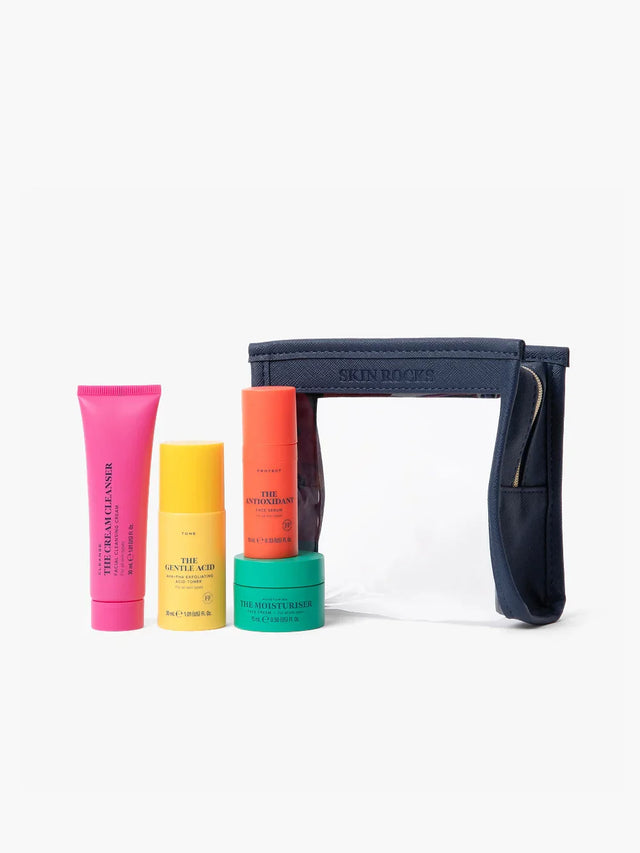
Skin Rocks The Control Acid contains 2% salicylic acid (BHA) and is suitable for anyone experiencing hormonal changes in their skin. It is great for 16yrs+ but can be suitable for younger skin experiencing this concern if used under parental supervision. The Control Acid works hard to unclog pores and regulate oiliness —targeting the root cause of congestion and controlling it before it occurs— and is clinically proven to reduce skin oiliness and increase smoothness* . It also has redness-reducing and barrier-supporting benefits to soothe and strengthen the skin. [Shop Skin Rocks The Control Acid]
*based on a clinical study of 50 participants with blemish-prone/oily skin, using the product regularly for 4 weeks.
Indu Clear and Glow Tonic Juice — Suitable for oily, combination or blemish-prone skin, this gently exfoliating, super-mild toner helps reduce excess oil and prevent breakouts, while soothing skin and leaving a natural glow. [Shop Indu Clear and Glow Tonic Juice]
Spot Treatment
Sam Farmer Intensive Plus Spot Gel — Targeting teen blemishes with a duo of acids, this effective gel contains salicylic acid to hoover out pores and calm inflammation, lactic acid to remove a build-up of cells, chlorella vulgaris extract to support the skin's microbiome and soothe redness, and glycerin to hydrate. [Shop Sam Farmer Intensive Plus Spot Gel]
Moisturiser
La Roche-Posay Effaclar Duo+M Anti-Breakout Corrective Gel Moisturiser — Containing exfoliating salicylic acid to remove excess oil and sebum, unclog pores and help prevent spots, this anti-blemish moisturiser effectively corrects and deeply hydrates. It has a moisturising and soothing action and is suitable for acne-prone/ sensitive skin and suitable for use alongside prescribed benzoyl peroxide
Mask
The Ordinary Salicylic Acid 2% Masque — A charcoal-and-clay-infused formula that targets textural irregularities, pore congestion, and excess oil. A solid, budget-friendly product for teens when used sparingly and as part of a gentle routine, this deeply cleansing masque removes dead skin cells which promotes soft and smooth skin, whilst the clay and charcoal absorb facial impurities that would otherwise clog pores. Use once or twice a week. [Shop The Ordinary Salicylic Acid 2% Masque]
Important: Do not use multiple acid-based products in the same routine, always patch test first, start slowly, and if irritation occurs, stop or consult a dermatologist.
Best practice:
- You can use an acid-based cleanser on days you're not using an acid toner. For the acid toning days, switch to a gentle cream cleanser.
- Limit your exfoliating toner to around 2–3 nights per week to avoid over-exfoliating and monitor tolerance.
- Keep the mask to once or twice a week max.
- Apply your spot gel only on active blemishes.
- Finish every routine with your moisturiser to protect and support your skin barrier. Always listen to your skin: if you notice redness, dryness, or irritation, scale back the acids/actives and focus on gentle cleansing and hydration.
Buy Teen Skincare — The Ultimate No-Nonsense Guide by Caroline Hirons

Words by Caroline Hirons, Skin Rocks Founder and Skincare Expert.